

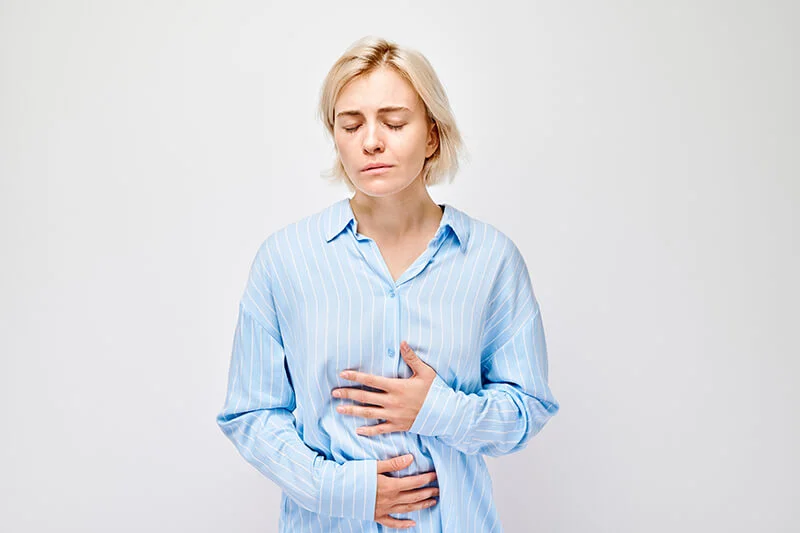
Bloating is one of the most common, and least discussed, problems after weight loss surgery. Many patients are surprised by how uncomfortable it can feel. The main cause is the change to how your digestive system works after a gastric sleeve or gastric bypass.
How digestion normally works
Normally, digestion begins in the mouth, where food is chewed and mixed with saliva. Enzymes in saliva start to break down carbohydrates. The food then travels to the stomach, where it is churned and broken down by stomach acid and digestive enzymes such as pepsin.
The stomach also produces intrinsic factor, which is needed to absorb vitamin B12.
Once food leaves the stomach, the small intestine absorbs the nutrients: carbohydrates, fats, proteins and water. In the large intestine, more water is absorbed, and gut bacteria break down what remains.
What changes after gastric sleeve or gastric bypass
Both procedures make the stomach much smaller. This means food is no longer broken down as fully before it moves on. Stomach acid levels are lower, there is less mechanical mixing, and with a bypass part of the small intestine is skipped.
As a result:
- Carbohydrates may not be broken down fully
- Fats may reach the bowel undigested
- The altered anatomy can change the balance of gut bacteria
These factors allow undigested food to reach the large intestine, where gut bacteria ferment it, leading to gas, pressure and bloating.
Common triggers for bloating
Bloating usually means something reached the bowel that the body could not fully digest. Typical triggers include:
- Lactose, especially if lactose intolerance develops after surgery
- Very fatty foods
- Food that empties too quickly or is poorly digested due to lower stomach acid
- Changes in the gut bacteria
- A shortened small intestine, which limits how much is broken down
How to ease bloating
There are several ways to ease the discomfort when bloating happens. Useful options include:
- Peppermint or fennel tea, which can help settle the gut
- Simethicone, an over-the-counter remedy from the pharmacy that breaks down trapped gas
- Gentle movement, such as a short walk
- A warm water bottle on your abdomen
- Probiotics, which may help balance your gut bacteria
Because your digestive system has changed, it is best to check with your dietitian or bariatric team before starting probiotics or any new supplement, so it fits your post-surgery plan. These methods do not cure the underlying cause, but they can noticeably reduce symptoms.
How to prevent bloating
The first step is to identify your personal triggers. Keeping a food and symptom diary can help you see which foods regularly cause bloating. Write down everything you eat and drink, along with any symptoms.
Many trigger foods are high in FODMAPs, a group of carbohydrates that ferment easily in the gut. Common examples include:
- Onions, garlic, cabbage, beans and other legumes
- Milk and dairy containing lactose
- Sugar and sugary foods
- Unripe fruit or certain berries
- Fatty foods like sausages and creamy soups
- Wholegrain bread and muesli
- Fizzy drinks
If your symptoms improve after removing these foods, reintroduce them one at a time to find the specific trigger. If bloating is severe, persistent or new months after surgery, speak to your bariatric team, as it is worth ruling out other causes.


