

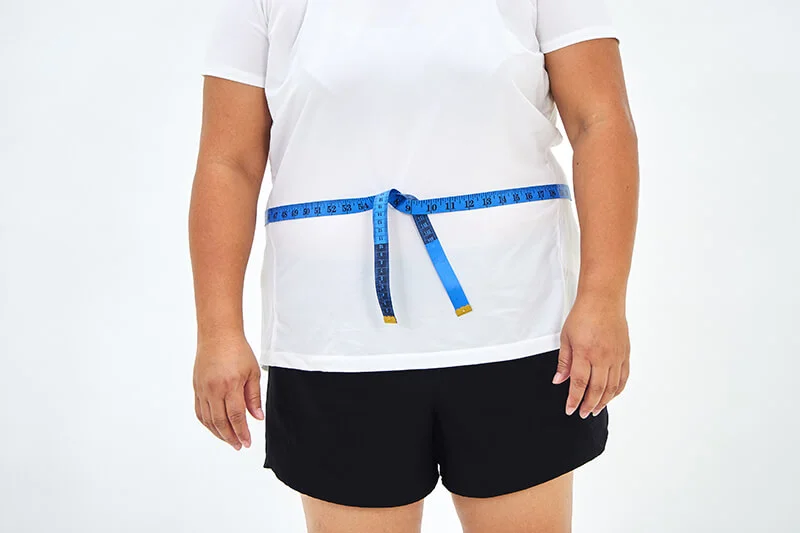
Everyone should care about their health and weight, whatever their gender. But many men are more relaxed about weight changes, which can make the shift from a healthy weight to overweight easy to miss. This is especially true for men with a strong or muscular build, as extra body fat can stay hidden behind a solid frame. The most reliable early warning sign is not the number on the scales, but the size of your waist.
Why BMI alone can mislead you
Many men assume their weight is all muscle, and BMI cannot settle the question, because it does not tell the difference between muscle and fat. A muscular man can have a BMI in the overweight range with low body fat, and a man with a healthy BMI can still carry harmful fat around his organs. This is exactly why your waist tells you more than BMI does.
What your waist size means
Men often gain weight around the middle, a pattern known as central or visceral fat. A growing belly can look harmless at first, but it is actually a sign of increased metabolic risk.
For men, a waist of 94cm (37 inches) or more means a higher risk, and 102cm (40 inches) or more means a high risk. These thresholds are lower for men of South Asian, Chinese, African-Caribbean or Japanese background, where a waist above 90cm already signals higher risk. To measure, find the midpoint between the bottom of your ribs and the top of your hips, roughly level with your belly button, and keep the tape snug but not tight.
Why waist fat is the dangerous kind
Carrying too much fat around the middle raises the risk of high blood pressure, type 2 diabetes and problems with cholesterol and blood sugar. Visceral fat is especially harmful because it sits around the organs and is metabolically active, which is why waist size can predict these risks even better than BMI.
Health comes before appearance
A relaxed attitude to weight can be a good thing, but ignoring early warning signs can lead to a long and difficult weight-loss process later on. Men benefit from taking their health seriously, checking their waist regularly, and acting when things start to change. Small steps taken early can prevent major health problems in the future.
Why men should pay attention
Men should treat their weight and health as seriously as anyone else. Relying on appearance alone, especially a muscular build, can be misleading. A tape measure is one of the simplest health tools you have. Checking your waist, paying attention to your body shape and acting early can prevent obesity-related problems before they become serious.


